
 Lana_C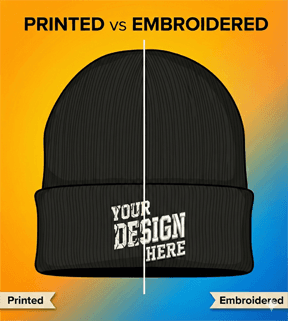
Knit Fabric Moves. Ink Doesn’t.
Custom Embroidered Beanies are made from knit fabric, which means they stretch every time someone pulls them on or adjusts them.
Printing works best on smooth, flat surfaces. A knit beanie isn’t smooth. The surface is textured, ribbed, and constantly moving.
Ink sits on top of the fabric. It doesn’t stretch the same way the knit does. Over time, that can lead to cracking, distortion, and fading. Even if a printed design looks good initially, repeated stretching can eventually cause it to break down.
That’s not a production problem. It’s simply how knit fabric behaves.
Why Bolt Printing Does Not Print Beanies
When you compare a printed beanie to an embroidered one side by side, the difference becomes obvious.
- Printed designs sit on top of the knit surface and may crack or distort as the fabric stretches
- Embroidered designs are stitched directly into the material and move naturally with the beanie

Watch the Difference in Motion
Seeing both decoration methods in motion makes the difference easier to understand.
Why Embroidery Performs Better on Beanies
Embroidery was built for textured headwear.
Thread is stitched directly into the knit, allowing the design to flex naturally with the fabric instead of sitting on the surface.
Embroidery also provides:
- A dimensional, raised appearance
- Cleaner presentation on ribbed knit texture
- A professional retail-style finish
- Better long-term durability through repeated wear
That’s why most premium retail beanies use embroidery instead of printing.
The Bolt Standard
At Bolt Printing, we only recommend decoration methods that perform well long term.
If a decoration method won’t hold up properly on a product, we won’t offer it. Beanies are a perfect example. Embroidery delivers the durability, flexibility, and professional finish that knit headwear requires.
That approach is part of the Bolt Promise, delivering products that look better, last longer, and perform the way customers expect.
You can also learn more about our Quality Guarantee and how we stand behind every order.
When you order custom beanies from Bolt Printing, they’re embroidered because that’s what works.
- Shop Custom Embroidered Beanies
- Design Your Custom Beanie